
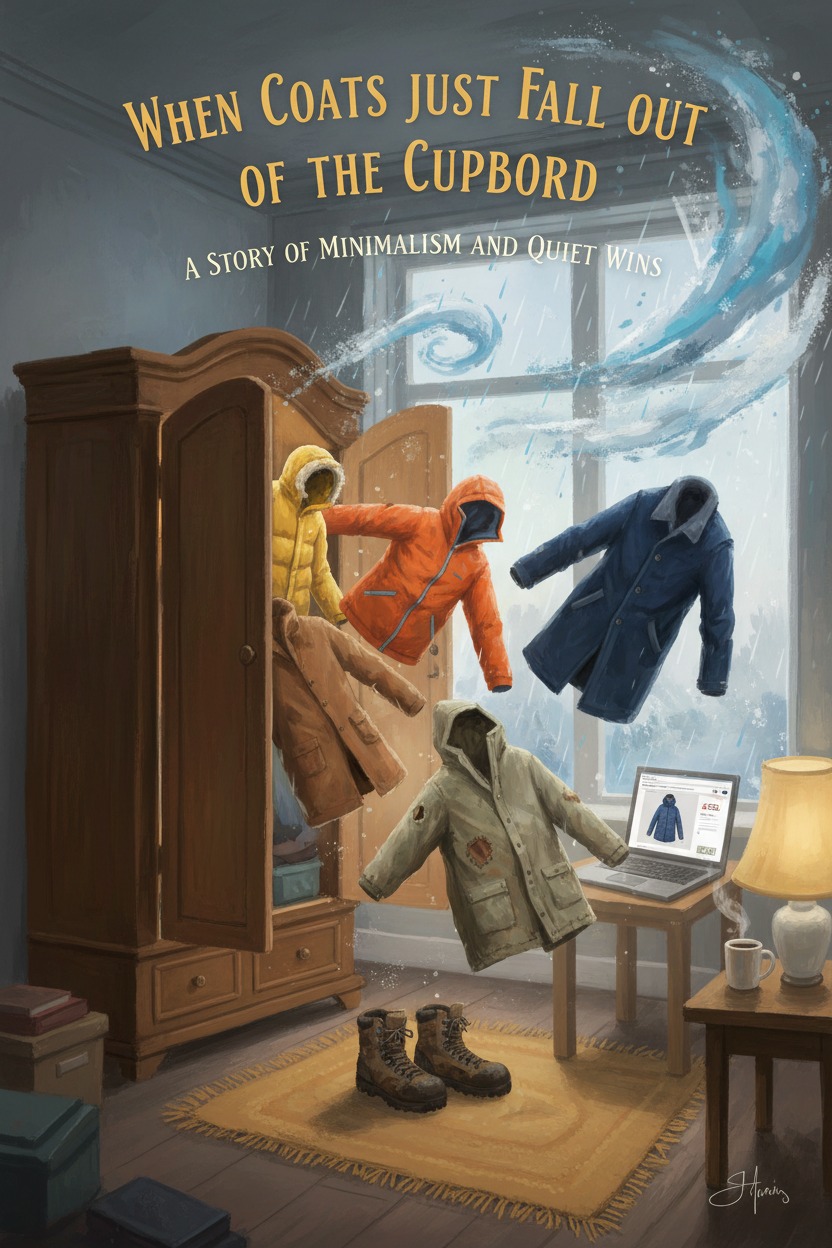
It was one of those January mornings when the forecast promises snow, sleet, and rain in a single day. My old rain jacket had been doing its best for the past decade, but the large hole over one shoulder made it about as useful as a chocolate umbrella. When my partner sent me a link to a heavily discounted replacement — £130 reduced to £53 — the frugal part of me did a little happy dance. On the surface, this was a steal: practical, long-lasting, and definitely the kind of jacket you brag about to yourself for bagging such a deal.
Yet, instead of immediately clicking “buy,” I paused. Just for a few minutes, really, while I considered the available colours. But those few minutes stretched into something more meaningful: a tiny, deliberate reflection on what I already owned. Suddenly, the bright yellow polar jacket I’d snagged in the summer for £20 came to mind. And the ski jacket in brilliant orange that had been hanging in the cupboard for years. Both designed for cold weather. Both still perfectly serviceable. And, it turned out, both capable of keeping me dry in the week’s forecasted rain.
In that quiet pause, I ran through three simple questions I’ve started asking myself more often:
- Do I really need this?
- Do I already have an alternative?
- Is this actually the best deal for me?
It was remarkable how quickly clarity arrived. I didn’t need the discounted jacket at all. In fact, I had exactly what I needed already hanging in the cupboard. When I shared this with my partner, they laughed and said, “And poof, you pulled it out of the cupboard.” I couldn’t help but smile. Not because I’d “saved money” or “won at frugality,” but because it felt like noticing something I already had — a small, quiet win that didn’t require spending a penny.
It’s tempting, in our culture of sales and instant gratification, to chase the “deal of the day” as though scoring it somehow proves skill, thrift, or cleverness. Minimalism and Financial Independence teach a different lesson: sometimes the best purchase is the one you don’t make, the one you pause on long enough to see the value already around you. My past self would have gleefully clicked “buy” because the price was right. Present me recognised the excitement, acknowledged it, and then let it fade in favour of a more deliberate choice.
I’ve noticed this pause isn’t just about clothes. It’s about a mindset. The moment you step back and ask whether something is truly needed, you also start noticing patterns: wardrobe creep, automatic replacements, buying “better” when perfectly good exists. That yellow polar jacket, for example, wasn’t just a bargain in July; it was a small investment that kept paying off, quietly, every cold and wet day since. I didn’t realise the full value until now — until I compared it against what I thought I “needed” in a bright January sale.
There’s a subtle joy in this kind of reflection. Not flashy, not dramatic, but real. It’s the kind of thing that makes minimalism and FI feel practical rather than performative. You start trusting your instincts and your cupboards, pausing long enough to see what’s there, and slowly, over time, you notice how little you truly lack. And sometimes, you even feel proud of that pause.
Here’s a tiny list I’ve started keeping in mind before any “great deal” tempts me:
- Check your alternatives: Is something you already own up to the task?
- Consider space: Will this add unnecessary clutter, or will it replace something worn out?
- Reflect on timing: Does this purchase actually meet a current need, or just an imagined one?
Applying these questions doesn’t make you perfect. It just makes your choices quieter, steadier, and more aligned with what actually supports your life. My standards for “a good deal” have shifted over the years: it’s less about the cheapest option, and more about whether the item genuinely enhances my life. Sometimes that means spending on luxuries like a favourite coffee, high-quality boots, or a personal training session — and sometimes it means walking past a bargain jacket because, well, I already have one that works perfectly.
Gentle Questions for the Road
As I reflect on this little January pause, I notice the bigger pattern it reveals. It isn’t about denial or strict minimalism; it’s about curiosity, attention, and quiet awareness. That pause — just a few minutes of thinking — changes how we see what we already have and how we approach the world of constant “deals” around us.
- What’s sitting in your cupboard right now that could do the job just as well as something new?
- When was the last time you paused before buying and realised you didn’t need it after all?
- How might a small moment of curiosity like this shift your relationship with purchases, deals, or even wardrobe creep?
Sometimes the biggest wins are the quietest ones — a jacket that’s been hanging there all along, a little moment of pride in pausing, and the simple realisation that abundance doesn’t always arrive in a shopping bag.