
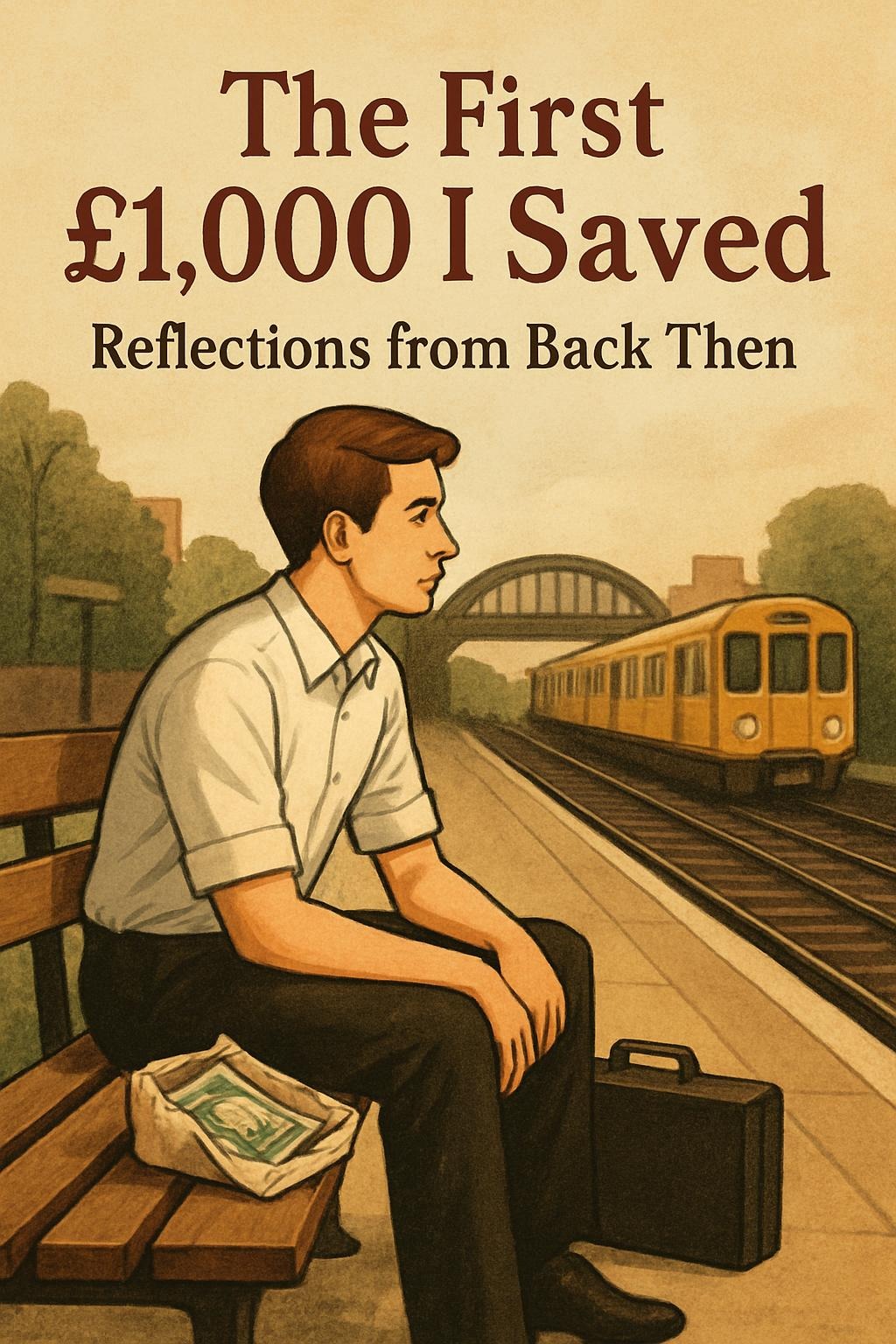
Back in 2013: My First Proper Job
Fresh out of university in 2012, I stumbled into my first proper job at the Money Shop in early 2013. It was the start of adult life in all its awkward, slightly terrifying glory: uniformed shirts, black slacks, and two trips across the city each day, there and back, hopping on three trains or tubes each way. Each day was a crash course in patience, observation, and learning the routines of grown-up work life.
Life at the shop was a mix of routine and small joys. Lunchtime became a small ritual of comfort: a chicken wrap and chips for under ten pounds. It wasn’t gourmet, but it was predictable, cheap, and somehow satisfying. And that uniform? A blessing in disguise — no temptation to splurge on a new wardrobe, which left more for saving. My commute, long as it was, offered pockets of time for reflection, people-watching, and the occasional eyeroll at the chaos of public transport. Everyday details — predictable routines, cheap lunches, and the relief of living at home — added structure and stability. These seemingly mundane routines formed the backbone of early financial independence.
£1,000 in Two Months
Living at home made hitting the first £1,000 remarkably fast. My monthly outgoings were around £500, covering commute, lunches, and the odd treat. That left the rest to accumulate in my checking account. Yes, my first “savings” wasn’t in a proper savings account — rookie mistake — but the thrill of seeing numbers climb so quickly was real.
In just two months, 0 turned into £1,000. I didn’t go full throttle — my job didn’t require me to. But that’s exactly the point: meaningful progress doesn’t always demand overextending yourself. You can make substantial strides without adopting all the trimmings of “adult life” at once.
Lessons from Loans and Pawnbroking
Working at the Money Shop also meant exposure to the grimmer side of money. I memorised scripts for payday loans, learning the language of desperation and caution. Pawnbroking fascinated me — testing the purity of gold, silver, and even diamonds felt like being a scientist in goggles, examining precious materials under the lens of curiosity.
These experiences were early lessons in why savings matter. Without a buffer, someone could end up paying 1,360% interest on a payday loan, or reluctantly accept a 5.99% pawnbroking rate. Even then, I understood that money isn’t just numbers; it’s protection, empowerment, and sometimes, a lifeline.
The Mindset Then vs. Now
Back then, my approach to money was rudimentary: no savings account, no automation, no investing knowledge. Today, it’s an entirely different beast. Pensions, equity in my flat, investments, automated saving — the financial ecosystem I now manage is sophisticated compared to the simplicity of £500 a month and a checking account.
Yet the core principles remain: consistency, awareness, and living within your means. That first £1,000 wasn’t about clever strategy; it was about showing up, being disciplined, and learning through action.
Small Wins, Big Lessons
Some of the smallest memories carry the biggest lessons:
- Living simply pays off: Minimal expenses accelerated early savings.
- Kindness and empathy matter: Treating every client with care, even in mundane transactions, reinforced perspective and patience.
- Curiosity has value: Understanding loans, pawnbroking, and financial traps made early savings feel essential.
- Slow accumulation works: Financial independence isn’t about instant gratification; it’s the sum of many small, steady victories.
Looking Back on My First £1,000
Reflecting now, the contrast is striking. From £0 in savings in 2013 to a net worth of £236K in 13 years, including pensions, flat equity, and investments, the journey has been gradual but significant. That first £1,000 was more than just money; it was proof that small beginnings can accumulate into substantial results over time.
Looking back, it’s impossible not to smile at the excitement of reaching £1,000, the simple joys of commuting, lunch rituals, and pawnbroking experiments. Life has grown more complex with responsibilities, home, and children, but those early lessons in simplicity, curiosity, and consistency continue to resonate. Small steps, repeated over time, create lasting results. Meaningful progress doesn’t require full throttle — sometimes steady, deliberate movement is more than enough.
Reflections Before Gentle Questions
The first £1,000 wasn’t a magic number — it was the start of a mindset. Life has become more complicated with responsibilities, but the principles remain. That early rhythm of saving, curiosity, and steady progress is still relevant today.
Gentle Questions for the Road
- Looking back at your own early financial milestones, what small victories stand out to you?
- How has your approach to money and adulting changed since your first “grown-up” job?
- Are there small habits today you can nurture that will make a difference in the long term, even if they feel insignificant now?